

ATLANTA — GP PRO, a division of Georgia-Pacific and leading innovator of advanced dispensing and smart monitoring solutions, has released the results of its latest hand hygiene research in recognition of International Infection Prevention Week, established by the Association for Professionals in Infection Control and Epidemiology (APIC). Entitled “Understanding the Hands that Care for Others,” GP PRO’s survey shares the hand hygiene experiences of 100 nurses working in acute and long-term care/skilled nursing facilities. While 92% of those polled assert that practicing proper hand hygiene is critical, more than half agree it is easy to miss a hand hygiene opportunity during a busy shift due to emergency situations; empty, inaccessible or non-working soap or sanitizer dispensers; and skin irritation making washing/sanitizing uncomfortable or even painful.
“As a 2025 APIC Visionary Partner, we are proud to support nurses and infection preventionists during International Infection Prevention Week, raising awareness about the vital role of hand hygiene in reducing the spread of healthcare-associated infections (HAIs),” said Ashley Butler, vice president and general manager, Skin Care, Tissue, and Wiper, GP PRO. “Our survey findings are invaluable in continuing to build empathy within our organization while helping inform GP PRO’s continued development of user-friendly, touchless dispensers, as well as highly innovative soap and sanitizer formulations that help reduce germs while moisturizing skin.”
Hand Hygiene Habits and Hurdles
Major health organizations, including APIC, the Centers for Disease Control and Prevention (CDC), and the World Health Organization (WHO), consistently identify proper hand hygiene as one of the best approaches to preventing the spread of infections in healthcare settings. Frequent hand hygiene practices, however, can take a toll on skin health, as only 14% of the survey participants described the skin on their hands as “normal, with no issues.” More than three quarters (76%) reported dry hands while others cited different conditions, including chapped (39%), sensitive (29%), cracked (26%), red (20%), uncomfortable (20%) and painful (11%) skin.
“We have great empathy for nurses on the front lines of infection prevention who wash or sanitize their hands up to 100 times during a single 12-hour shift,” said Dr. Mary Glesner, director of R&D, Georgia-Pacific Neenah Technical Center. “Our unique soap and hand sanitizer formulations include gentle foam soaps for everyday handwashing and moisturizing hand sanitizers for frequent use, as well as antimicrobial soaps and sanitizers that are proven effective at killing germs while also soothing sore hands.”
Critical Wash-and-Dry Connection
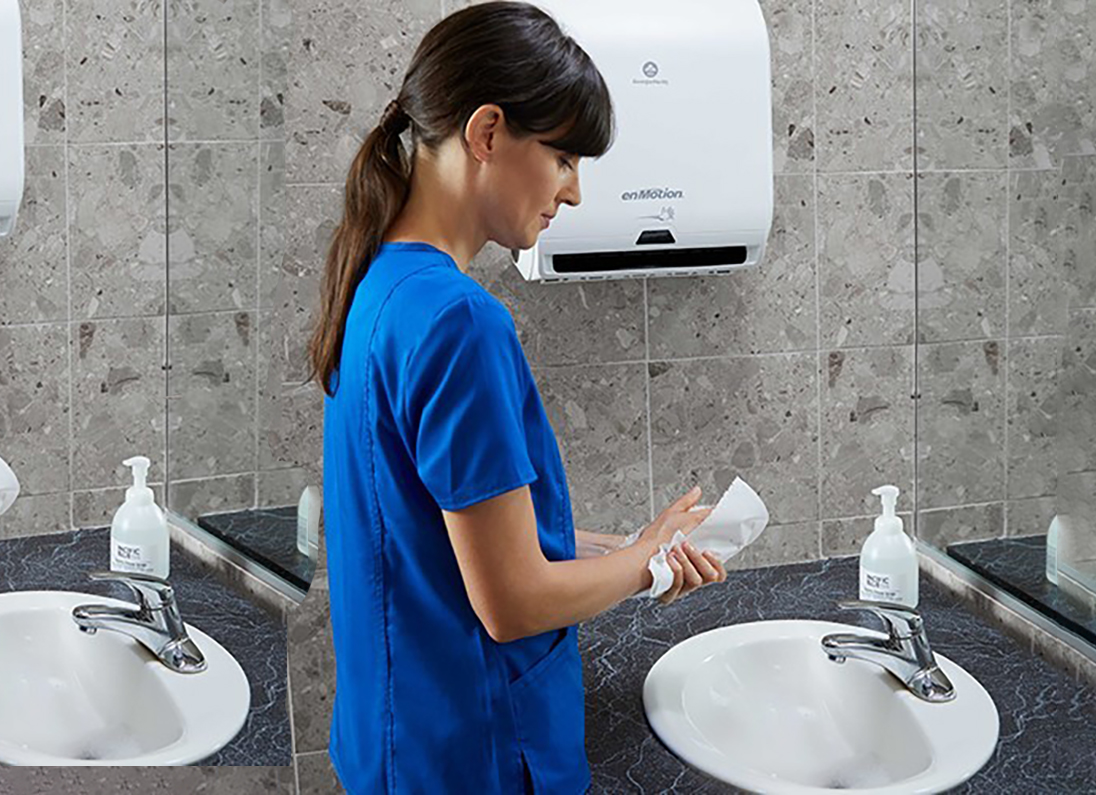
Nearly all survey participants (99%) reported that thorough hand drying after washing with soap and water is important for effective hand hygiene while most (59%) agree that hands are not thoroughly cleaned unless also thoroughly dried. Wet hands can increase susceptibility to harboring germs and impede the ability to put on gloves quickly. Paper towel quality was a factor, with 73% noting thicker varieties are more absorbent and hasten hand drying while 63% say nurses/staff are more likely to use softer paper towels because they feel better on dry/chapped hands.